A library built for people
Today I want to talk about my favorite building in Finland, the Oodi. The Oodi is a library, now I love all libraries but the Oodi might be my favorite in the world because of how wonderful its accessibility and usability is. Opened in 2018, the Oodi library is one of my favorite examples of user-centric design and co-design.
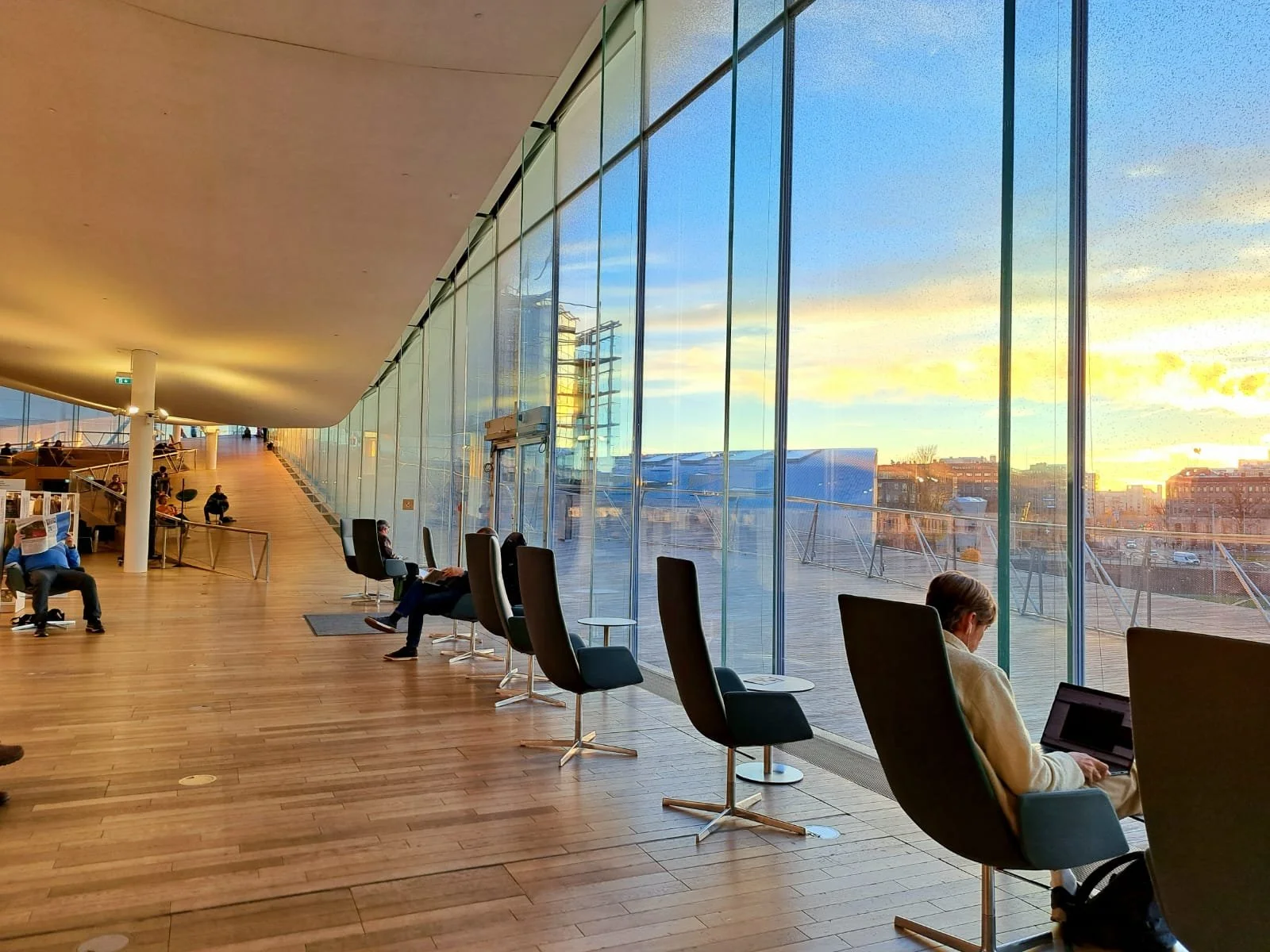
A photo I took of sunset on the top floor of the Oodi
User-centric design has become something of a buzz word of late, but truly well executed user-centric design is not as common as it should be. User-centric design focuses on simplifying tasks for users and focusing on visibility and usability and accessibility of elements a user would interact with. So what does user-centric design mean for a library? Well it means the obvious stuff like having wheelchair accessibility, but it also means accounting for how the users will prefer to use the space, i.e. will they bring laptops and therefore need outlets? Will they need spaces to work on group projects? Will they need dedicated children’s spaces? The Oodi has all this and more.
On the first floor of the building you have book checkout and returns, a public computer lab, a youth hangout space, a small restaurant, an art exhibit and a few chess tables. On the second floor of the building you have group study rooms, music studios, a makerspace with various tools such as 3D printers and sewing machines, a kitchen, gaming rooms and frankly more that I’m probably forgetting. And finally on the top floor you have the majority of the book shelves, open tables with outlets for studying, a children’s playground and storytime room, a cafe, an event space, and, when the weather is nice, an observation deck.
In essence the Oodi is a fully functioning town square that contains everything you might want for a day full of activities. In that sense it reminds me of what Victor Gruen, the creator of the shopping mall, intended malls to be, which is indoor all purpose town squares. Only instead of being centered around shopping, the Oodi is centered around community activities.
There is a reason that the Oodi is so community centric, (beyond it being a library or course) and that is because the Oodi is utilizing the other design method that I brought up, co-design. Co-design is a Scandi/Nordic design method so it’s no surprise that the Oodi utilizes it. Co-design at the most fundamental level, simply means involving users in the design process in a way that treats them as equally knowledgeable, it’s a method that seeks to treat users as literal "co-designers" and views users as experts in their own wants and needs. When the library was first proposed, co-design ideation workshops were conducted with residents of Helsinki, and the co-design process has not ended there, throughout the years the library has continued to incorporate feedback from its visitors
This is why I find the Oodi library so compelling, it is a project that focuses on its users first and foremost, and treats its users as experts in their own needs, which has led to a space that fosters community and connection.
And if that doesn’t convince you to visit, perhaps the cute little book carrying robots will.
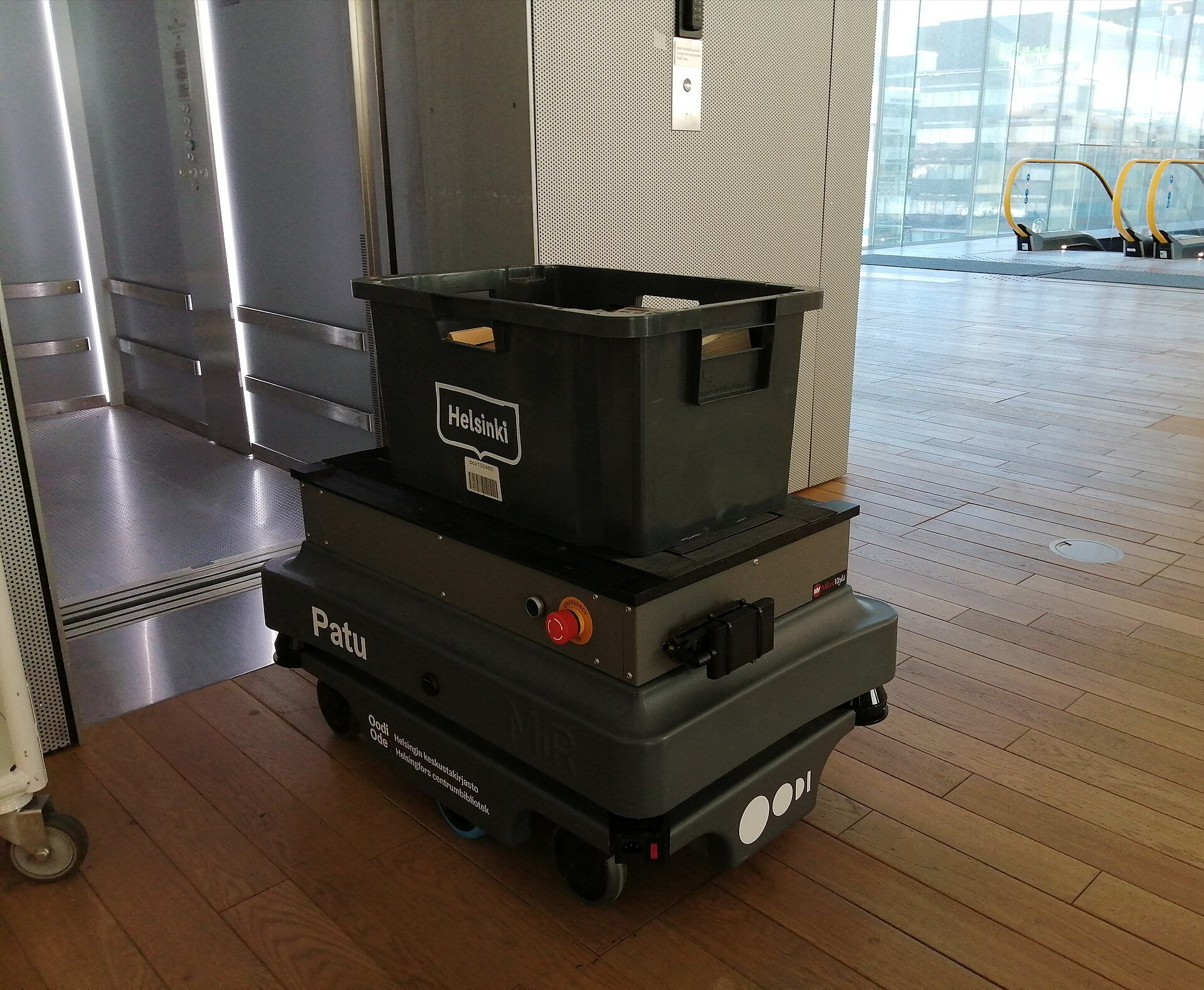
A book carrying robot at the Oodi.
If you are interested in my research, please visit my website’s about page.
If you are interested in collaborating with me in some way, please reach out to me on Linkedin.
Further Reading & Related Links: