Culture

Taste, Posers and AI

In this article, I want to talk about taste, and I’m going to use taste as an umbrella term for taste, style and “coolness”. I’ve been thinking about this topic lately in regards to my own artistic practice, for those who don’t know I’m an illustrator and have been drawing since I was a kid. I’ve been thinking about taste because taste defines our unique artistic voice, but it also trains us as artists. A painting can be good on a technical level, but it is the cultivation of your own taste as an artist, or group of artists, that makes a work of art truly engaging.

Effort is Part of Taste

This is also part of what makes AI art so "soulless". Now one might argue that if taste is what makes a work of art engaging, then AI art should be as good or bad as the person who produces the prompt. However this belief is rooted in a misunderstanding of how taste is formed, taste is formed by the cultivation of one's own artistic craft, it is through practice that one comes to understand one's own taste. Ira Glass has a quote about taste, “All of us who do creative work, we get into it because we have good taste. But there is this gap. For the first couple years you make stuff, it’s just not that good. It’s trying to be good, it has potential, but it’s not.” I would take this a step further and say that while one may start out with an intuition of what good taste is through the consumption of media that informs their taste, it is not until they begin to implement their craft that they understand how their taste shapes their art. 
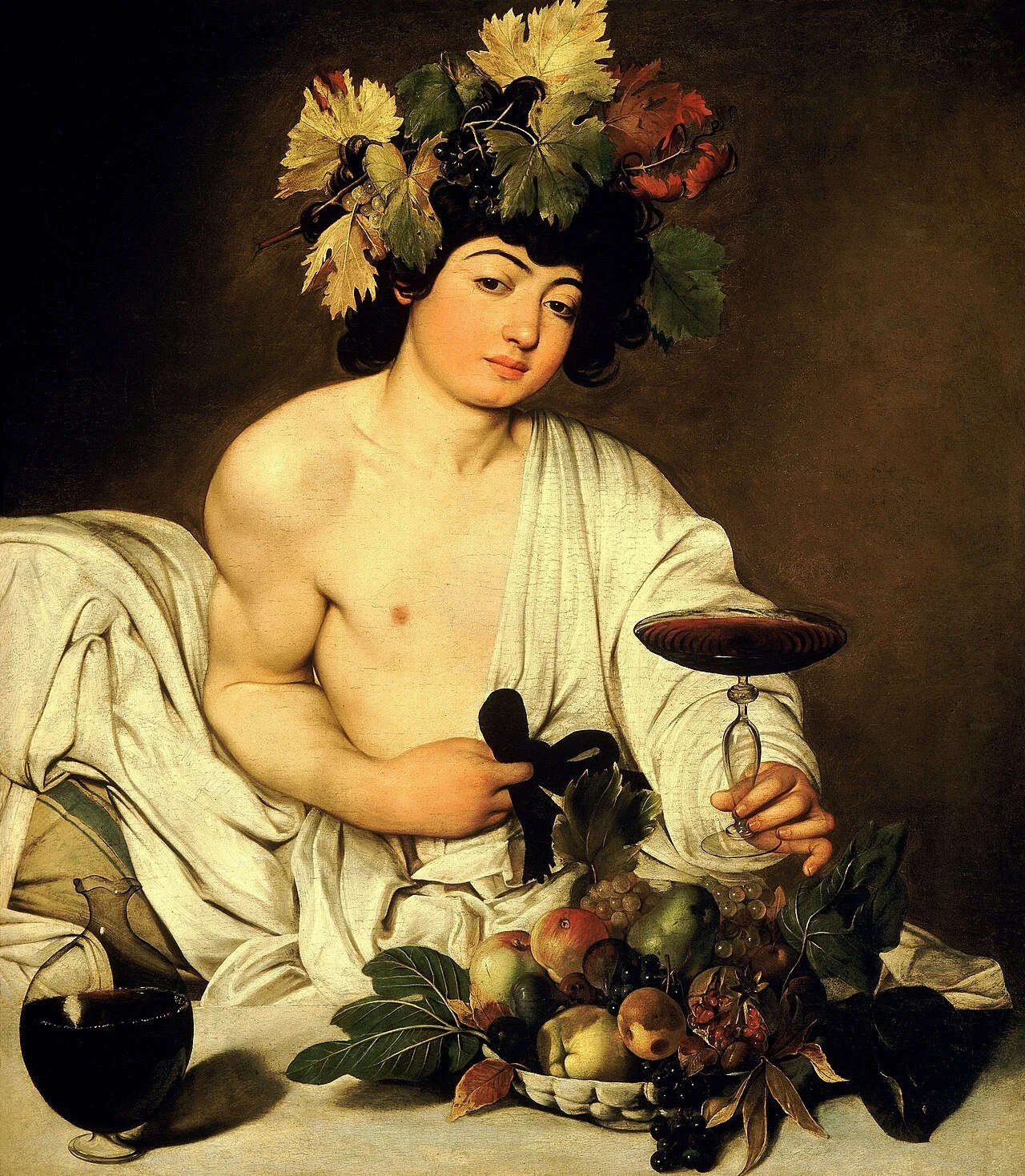
Bacchus by Caravaggio, an example of chiaroscuro, and highly regarded work of art.

To use drawing as an example, you may appreciate the lighting style of chiaroscuro, but until you practice chiaroscuro yourself your taste as an artist is copying the taste of others, but not yet transforming it, once you begin to practice the technique your taste becomes your own. Fashion critic Bliss Foster, once said that “quality is care”, I’ve been thinking a lot about this statement. The care and effort you put into your artform is part of what makes your art good, it’s part of what shapes your taste. Without effort you are not expressing your taste, merely copying the taste of others.

Culture is Part of Taste
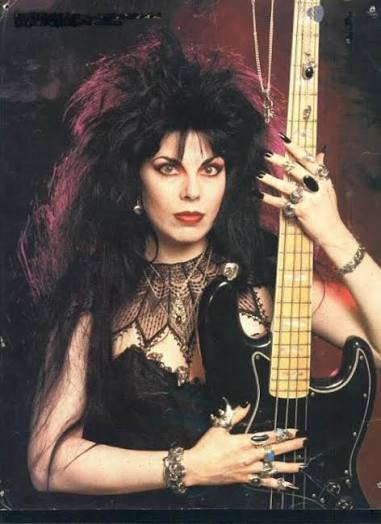
Patricia Morrison, goth musician and icon.

Taste is never independent of other people, taste is in fact informed by others and cannot exist in a vacuum, because taste is cultural. Much like being funny, good taste is something that must be conferred onto someone by others, because taste is rooted in culture, this is why there are different beauty standards and preferences in different cultures and subcultures. The aesthetic preferences of an American goth in Seattle is going to be wildly different from the preferences of a Hmong person in rural Laos, this is a fundamental part of taste. It is so fundamental that taste and culture are almost inseparable.

To use goth as an example, it’s generally agreed upon in alternative communities that buying a complete goth outfit from fast fashion brands is considered uncool. What makes a goth fit ordered wholesale off Temu tacky and lame, versus a goth fit curated piece by piece and DIYed by hand? Well two things culture and effort, a person who has pieced together a look bit by bit, they have likely been engaging in the goth subculture for awhile if their outfit took a long time to curate, and to go back to my example if learning chiaroscuro, they have put in the effort to implement their own taste into an artistic expression. Both the cultural context and the effort are fundamental in giving them good taste in goth clothing.

While we’re on the topic of a Gen X dominated subculture, let’s talk about a term Gen X popularized, the poser. The poser is trying to be part of a subculture that they don’t yet have the right to claim, and there is no worse poser than the person who commercializes the signifiers of a subculture without engaging in the community, in this way being a poser is comparable to cultural appropriation, both are a taking of something without giving back to the community. What’s more is that since taste is cultural, motifs which define a subculture, be they the makeup styles of goths, the embroidery patterns of Ukrainian vyshyvka, or the drawing styles of animations on Newgrounds, are collectively formed, have specific cultural context, and comprise the taste of that subculture. Artistic styles and motifs come out of groups of artists communicating with each other, and these motifs then go on to become iconic aspects of the subcultures that created them. And to the subcultures that collectively create them, they have specific meanings, when motifs are removed from the context they are created in, such as when a motif is mass produced and commercialized, the meaning is lost, resulting in poor taste on the part of the manufacturer or creator.

This is part of why mass produced objects, and corporatized art is viewed as being of less artistic merit. This is also why “AI slop” is so disliked. AI “art” removes both the effort that forms an artist’s taste, and the cultural context that shapes motifs found in the “art”, and in doing so, generates nothing but an echo of better art. Generative AI “art” is the equivalent of ordering a meal off an app, and claiming because you enjoy the flavors of the meal you, and because you ordered the meal, you are a chef. Until you try and incorporate the flavors you tasted into your own cooking, you are not a chef, you are a consumer, the same holds true for being an artist versus consuming art.

Taste is a Type of Power

So why bother to AI generate images and call them art? Why do AI companies so desperately want to be seen as arbiters of taste. Why do billionaires do things like, throw big bucks to the Met Gala? Why the desperation to be perceived as having good taste? Taste is a form of social currency, it’s the social currency of being cool, and it creates respect and trust. When we trust someone’s taste in art, we are more accepting of their actions, just  look at how celebrities' crimes are treated. For AI companies, and for billionaires alike, having taste is a way of cultivating acceptance of their actions.
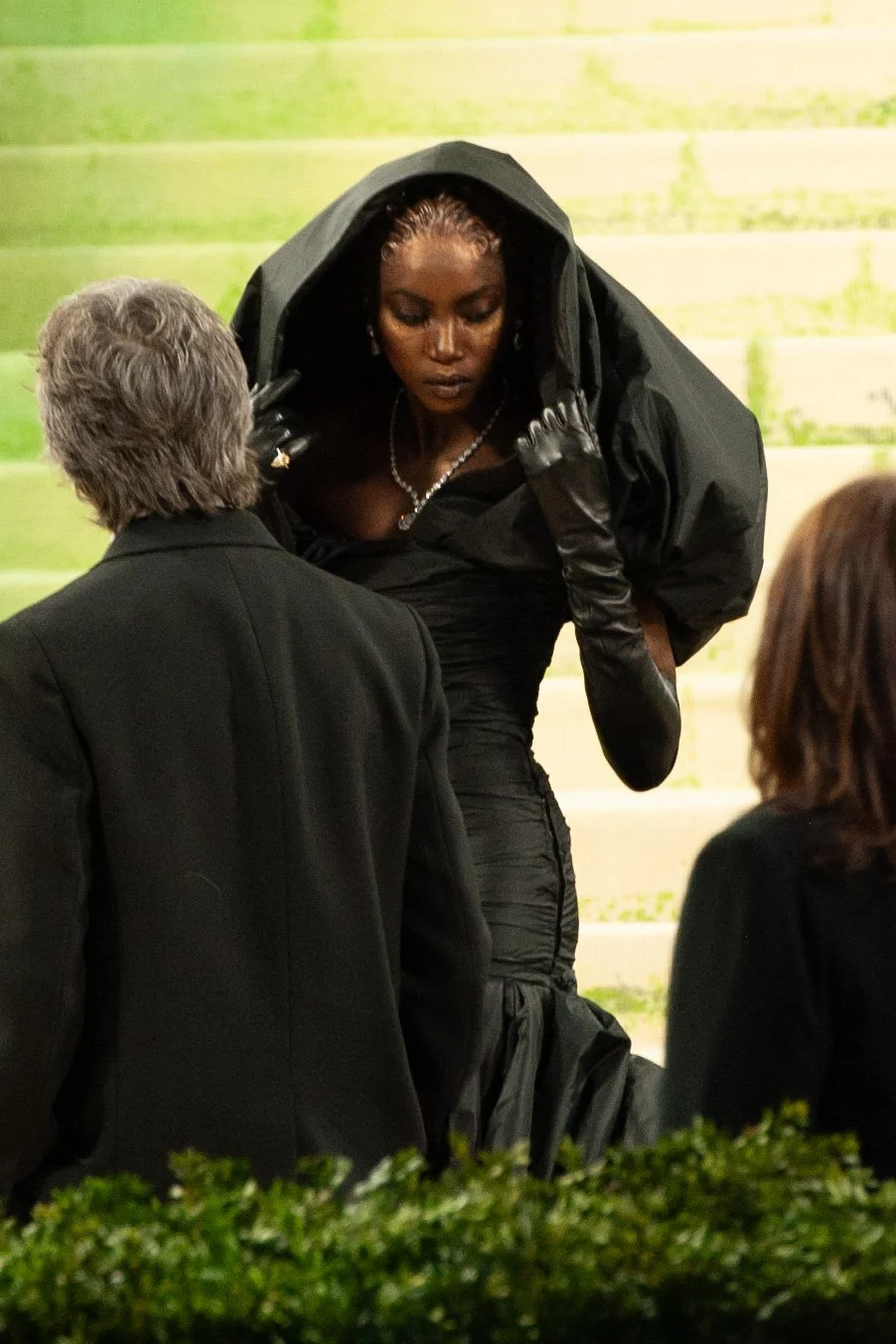
Anok Yai at the 2026 Met Gala, wearing fashion in theme of "Costume Art"

Ironically, taste is a type of social power that is often difficult for the rich, the powerful and the corporatized to obtain. New cutting edge art usually comes from those who are marginalized in one way or another, so much of our most beloved art has come from queer people, like Freddie Mercury and Gertude Stein, from poor drug addicts, like Janis Joplin and William S. Boroughs, from communities that have been disenfranchised by mainstream society. Look at how much popular American music has been defined by black American culture, a culture that has been among the most marginalized in the US. I my opinion new interesting tastes come from outside the mainstream because of a continual search for authenticity in art, and the less “mainstream” the less sanitized, the less corporatized, the less commercialized, and even the less popular a work of art is the more likely it is to be viewed as authentic. In a future post I may explore why we seek authenticity in art, but before I veer off into the weeds of free flowing thought, I want to refocus on the central topic of this article, taste, and how it is formed. 

In my opinion, artistic taste is formed not simply by consuming art, but by the act of creation itself, much like tasting flavors in a dish, you might enjoy the dish, but until you begin cooking yourself you won’t fully understand how those flavors are incorporated into the dish, how they play off each other and why they were chosen for that dish. Furthermore, as in cooking, taste is cultural, and immersing yourself in the culture whose art form you are interested in pursuing will help you in your journey of developing your taste. If you have a creative practice of some kind, there is nothing like the act of creation to hone your taste.

Everything I write was written using only my brain, without of the help of LLMs, if you are interested in my research, please visit my website’s about page.

If you are interested in collaborating with me in some way, please reach out to me on Linkedin.

Further Reading/Watching

What Does "High Quality" Mean in High Fashion?

Why Tech Bros Are Now Obsessed with Taste

Late capitalism creates its own aesthetic categories

The Fading Underground: The Decline of Subculture in the 21st Century

Gen AI and Strip-mining the Internet for Content

The mirror colonization of the internet

As someone who grew up in internet spaces, who first got onto the internet as a child during the Myspace era, I’ve watched the slow transition of the internet from an open wilderness, full of small communities with their own rules, to an enclosed space with virtual walls and fences, where the rules are made, not by the community, but by the website (or app) owners, by internet barons if you will.

When I was eleven I remember having a class discussion about the internet and how the (then growing) Facebook was changing the landscape of it. “It won’t always be the wild west online”, was what our teacher said, at the time I didn’t believe him. It was inconceivable to me that the internet could be boxed in, I was a nerdy kid who spent a lot of time online, and it seemed boundless back then. Of course things have changed now, now only have internet spaces been enclosed, there is an active attempt to push out human voices on the internet via AI slop.

Today I want to explore the evolution of the internet as a cultural space through the lens of colonization, because frankly, I don’t think it’s an inaccurate framing. This is in no way intended to lessen the impact of real-world Colonialism, and of course, unlike in real-world Colonization, no one has died in the process of internet colonization. But subcultures have died, communities have died, and spaces that were once communal have been privatized, controlled and exploited, and in that sense the changes that have happened to the internet can be said to be a mirror of real-world Colonization. So to distinguish this phenomena from real-world capital-C Colonization, which has had an almost incomprehensible impact on history and still affects people deeply today, I’m going to refer to this phenomena as mirror-colonization, because it reflects capital-C Colonization, and I believe, is a derived from a similar mindset of resource extraction, and devaluing humans, that drove real-world Colonization.

Mirror-colonization, as I see it, pertains to ephemeral, non-physical communities rather than communities that inhabit or have inhabited, real-world places, it involves the commodification, privatization and exploitation of that non-physical community for profit, often at the expense of the community that built or supports it. The internet is not a place physically, but is still a place we go to, with different regions, such as different websites, apps, forums etc. And each of these online places have their own community and own culture, or multiple communities and cultures. 

On the internet, mirror-colonization started with the privatization of the internet, which to an extent, began even before I was born, but which really ramped up in the early 2010s. After moving away from more open forms of internet space curation, such as webrings, internet spaces became curated via search engines SEO (search engine optimization), which ultimately lead to paid SEO, allowing companies who had the most money to push their websites to the front page of search engines like Google. This led only to the prioritization of websites owned by for profit companies, but led to advertisements becoming some of the first results you would see in a Google search. But that point, the internet had already begun to silo and congeal into large corporate owned websites that required creating user accounts to view information, Facebook and Twitter were two major

But internet places are not the only ephemeral communities where mirror-colonization can happen. A similar type of mirror-colonization can be said to have taken place in the punk community in the 80s. What started as an organic subculture, intended to rebel against corporate greed, commercialization, and capitalism (among other things) eventually became co-opted by those very same forces. Corporate companies now sell the idea of punk (along every other subculture under the sun), offering your strategically pre-ripped jeans for only $9.99, made by an impoverished woman in Bangladesh, so that you can look punk, while completely disregarding the ethos and ideas of punk. This mirror-colonization is a process which has happened to countless subcultures, punk, hippie, emo, reggae, hip-hop, and countless more. Mirror-colonization is probably happening to some subculture I’m unaware of right now. I want to explore the topic of subcultures, mirror-colonization and commercialization more thoroughly in a future post, but for now, let’s just acknowledge that this problem is widespread and pervasive in 2026..

I bring up punk in the context of mirror-colonization, because I think it’s important to acknowledge that this phenomena did not begin with the internet, nor will it end if we all stopped using the internet tomorrow, the sense of soullessness you may feel when perusing the internet these days is not rooted in the internet itself but is a systemic problem. This is a pervasive problem that’s rooted in the way modern society has built up capitalism, to be a system that extracts resources, for profit, as efficiently as possible, and then disregards the source (place, community etc.), those resources were extracted from.

Extraction of resources at all costs, is where colonization, both capital C-Colonization and mirror colonization ultimately lead. And this brings us to generative AI, specifically generative AI in the context of creative work and community made work. At this point you’ve probably heard about how generative AI pulls from large databases of unlicensed works, and how the creators of those works have no way to opt out, or even know that their work is being stolen. I am by no means wholly anti gen AI, being an HCI researcher myself, I of course understand that it has its positive use cases, even including use cases for consumer-facing interactive systems. And perhaps in a future post, to counter the negativity of this one, I will go over what I feel are some examples of positive use cases of gen AI. But in the context of cultural artifacts such as visual art, creative writing, and music, and the communal online spaces that support these endeavors,  gen AI is almost wholly consumptive without contributing anything of substance.

Therefore, in the context of communal creative spaces, which make up much of the internet, gen AI is akin to a strip mining company or logging company tearing down a forest. A force that comes into a thriving space, takes all the resources that space has, and leaves nothing but trash and pollution in return, leaving the space lifeless and empty. Just look at Deviantart for an example of a place where this has happened, what was once a thriving community of artists and art fans, actively creating, interacting and engaging with each other, is now a wasteland of gen AI art, with a dying user base and little engagement. Now you could say that Deviantart has been on the decline for awhile now, and you’d be right, but the nail in the coffin was when Deviantart stole it’s user’s artwork to train its own gen AI model, and much like loggers destroying a forest, killed the very thing that gave it value.

Gen AI, as it stands currently, is largely used for the extraction and exploitation of resources, in this case personal data. Personal being the operative word there, the resources being extracted are personal, from photos of a child’s birthday party, to a poem written for a dead loved one, to a self-published book painstakingly written with blood sweat and tears. These are the artifacts that are taken without consent, processed as raw material, and then sold back to us, not unlike a mining company taking up land that does not legally belong to them and then selling what was extracted from that land back to its former inhabitants. This is, I believe, why gen AI, and especially gen AI in art and other cultural settings upsets people, it’s certainly why gen AI upsets me at times. On the one hand, as an HCI researcher I am excited to see how we can use LLMs and other gen AI systems in interesting ways, but as an artist I see the damage that gen AI cultural artifacts cause to online creative communities. And while I make no claims of being a historian, I can see the historical parallels between what’s happening with gen AI and what happened with other major technological revolutions, such as the industrial revolution which was supported by the transatlantic slave trade. Which is to say, in its current form, it’s a technology that is built off exploitation of labor, as has so often been the case.

If gen AI is to be a net positive for society as its major proponents claim it will inevitably be this is something that must be reckoned with.

Note: What I post on this blog is opinion, not scientific research, though I will sometimes link to relevant open-access scientific publications in my further reading section. If you are interested in my research, please visit my website’s about page.

If you are interested in collaborating with me in some way, please reach out to me on Linkedin.

Further Reading:

Post-Colonial Punk

Why DeviantArt Will Soon Be Dead And How The Platform Is Killing Itself

Andrejevic, Mark. (2009). Privacy, Exploitation and the Digital Enclosure. Amsterdam Law Forum. 1. 10.37974/ALF.86.

Oksanen, Atte & Celuch, Magdalena & Oksa, Reetta & Savolainen, Iina. (2024). Online communities come with real-world consequences for individuals and societies. Communications Psychology. 2. 10.1038/s44271-024-00112-6.